
The CIO and Generative AI: Architect of the future or spectator of change?

Faced with this pressure, the big question arises: Is it better to watch the market mature or to take the plunge and lead the implementation?
The Problem: Analysis paralysis in the face of a range of options
Today's CIOs face a constant barrage of solutions: from open-source LLMs to co-pilots integrated into SAP and Microsoft Azure. The fear of making a costly decision that will be obsolete in six months, or worse, compromise data security, is creating a gap between companies that innovate and those that wait for the “perfect moment.”
The Turmoil: The Risks of Extreme Positions
For a Chief Technology Officer, failing to make an informed decision has direct consequences for the relevance of their role to the Board of Directors. Let's analyze the scenarios:
1. The Spectator CIO (“Wait and See”)
• Pros: Avoids initial investment in immature technologies and observes the mistakes of others.
• Cons: Drastic loss of competitiveness. While you wait, your competitors are reducing operating costs by 30% through AI agents. By the time you decide to act, the talent and data gap will be irrecoverable.
2. The Uninformed Leader (“Jumping in without a compass”)
• Pros: Perception of rapid innovation before the Board of Directors.
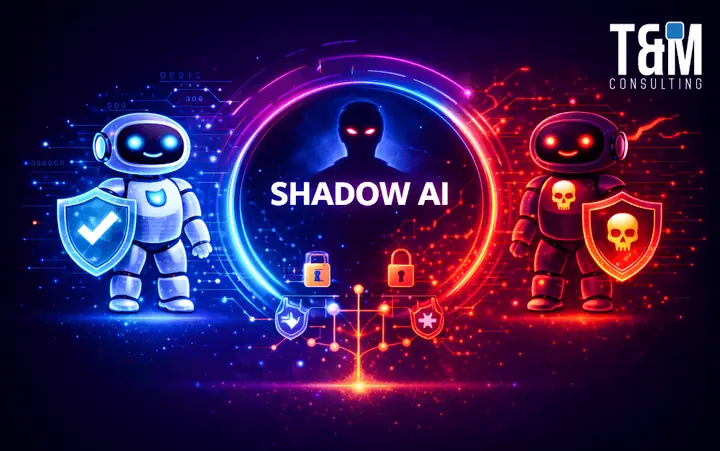
• Cons: This is the most dangerous scenario. Implementing AI without a solid foundation of data governance (especially in regulated sectors in Mexico or Venezuela) leads to leaks of critical information, hallucinations in SAP financial reports, and the phenomenon of Shadow AI (employees using unsecure external tools).
The Solution: Foundations for Strategic Decision Making
The question is not whether to use Generative AI, but how to choose the infrastructure that protects the company. At T&M Consulting, we help CIOs filter out the noise through three decision pillars:
1. Integration with the Core (SAP): AI should not be an external patch. The best decision is one that leverages the data already residing in your ERP, allowing natural language queries about inventory or cash flow.
2. Data Sovereignty and Security (Azure): In 2026, privacy is an asset. Choosing models that run within your own Microsoft Azure instance ensures that your information is not used to train public models.
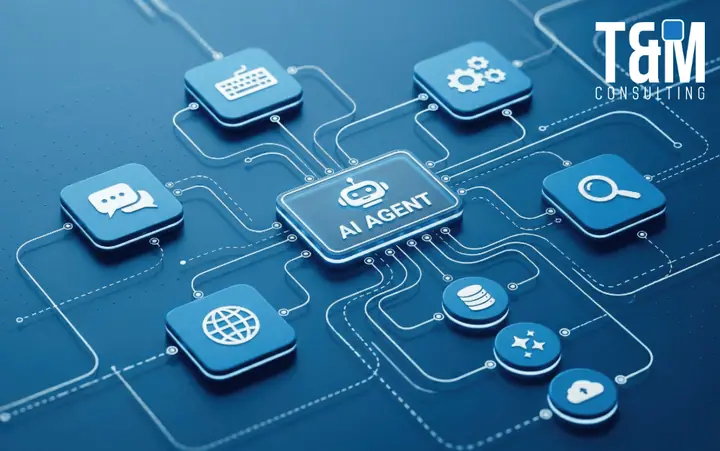
3. Scalability and ROI: Less is more. It is preferable to implement an AI agent specialized in a critical process (e.g., Accounts Payable) than to attempt a massive deployment without clear objectives.
How to choose the right partner?
A leading CIO knows that they cannot (and should not) do it alone. Choosing T&M Consulting as your strategic partner means having a team that understands that Generative AI is a layer of intelligence, but SAP and the Cloud are the foundation.
We don't just deliver technology; we deliver AI Governance. We help define usage policies, clean up data so that AI doesn't lie, and train your team so that the transition is cultural, not just technical.
Take control of your company's technology narrative
The role of the CIO in 2026 is to elevate technology to the Board of Directors' strategy table. Don't be a spectator of your industry's transformation; be the one who defines the rules of the game.
At T&M Consulting, we have the experience throughout Latin America to turn your vision into a secure, profitable, and scalable AI architecture.
Schedule a strategy session for CIOs and define your AI Roadmap contact@tmconsulting.mx