
Traditional ERP or cloud-based ERP? How to choose the best option for your SME in 2025
1. What is ERP and why do you need it?
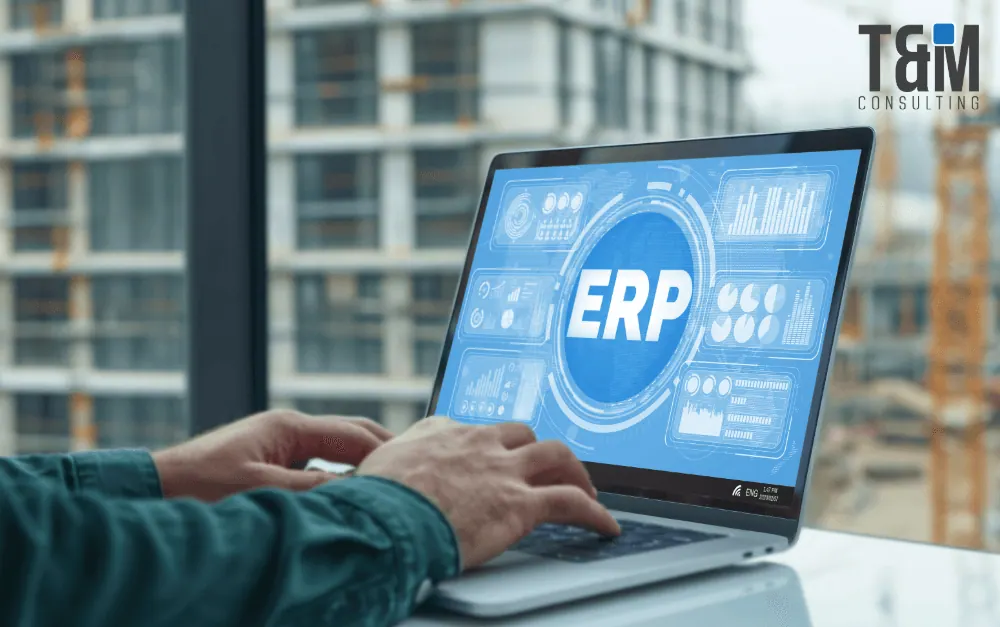
ERP integrates different areas of a company—such as accounting, inventory, sales, purchasing, and human resources—into a single system. According to a study by Panorama Consulting, 95% of companies that implement ERP achieve significant improvements in their operational processes.
In the case of SMEs, an ERP not only organizes internal information, but also enables more strategic decision-making based on real, centralized data.
2. Traditional ERP vs. cloud ERP: key comparison
| Feature | Traditional ERP | Cloud ERP |
| Infrastructure | Requires own local servers | Infrastructure hosted by the provider |
| Initial costs | High (licenses, hardware, IT) | Low (subscription model) |
| Maintenance | Responsibility of the company | Responsibility of the provider |
| Access to information | Only on the local network | From anywhere with internet access |
| Updates | Manual and periodic | Automatic and continuous |
| Scalability | Limited by hardware | High, adaptable to growth |
| Data security | Internal, depends on your own IT team | Backed by certified data centers |
According to Statista, 53% of companies already use cloud solutions for their critical operations, and this figure is expected to exceed 70% by 2026.
3. Key benefits of cloud ERP for SMEs
Cost reduction: No need for large investments in servers or maintenance.
Mobility: Real-time access from any connected device.
Greater security: SAP, for example, complies with international data protection standards such as ISO 27001.
Seamless updates: You will always have the latest version.
Flexible scalability: Ideal for businesses that are in the process of expanding.
In addition, SAP Business One Cloud is specially designed for SMEs, allowing them to access analysis, automation, and financial control tools with an optimized learning curve.
4. When to consider a traditional ERP?
Although cloud ERP is usually the best option for most SMEs, there are particular situations where a traditional ERP may make sense:
Companies that already have robust infrastructure and dedicated IT staff.
Businesses with very specific legal restrictions on data storage.
Organizations operating in regions with poor connectivity.
Digital transformation is not a trend: it is a necessity. Choosing the right ERP is one of the first and most important steps in taking your SME to a new level of efficiency, competitiveness, and growth.
In most cases, opting for a cloud ERP such as SAP Business One Cloud provides immediate benefits in terms of cost, accessibility, security, and scalability.
At T&M Consulting, we can help you evaluate the best solution for your company and accompany you throughout the implementation process.
Want to know more? Write to us at: contact@tmconsulting.mx
Visit our website: tmconsulting.mx