
Serverless and Edge AI: how modern architectures are evolving
According to Gartner (2024), more than 65% of organizations will adopt cloud-native and serverless architectures by 2026. At the same time, the consulting firm Markets and Markets estimates that the global Edge AI market will reach $107 billion by 2030, growing at a compound annual rate of 21%. These figures reflect a profound change in how companies design and run their technology systems.
What is Serverless Computing?
Serverless computing does not mean the absence of servers, but rather that the infrastructure is completely abstracted. Cloud providers such as AWS Lambda, Microsoft Azure Functions, and Google Cloud Functions allow developers to deploy code without worrying about managing servers, scalability, or maintenance.
Key benefits of serverless:
• Automatic scalability: resources are adjusted to demand in real time.
• Pay-per-use: companies only pay for code execution, eliminating idle infrastructure costs.
• Agility in development: teams focus on the product, not the infrastructure.
According to IBM Research (2024), organizations that adopt serverless achieve a 30% reduction in the time to launch new applications compared to traditional architectures.
What is Edge AI?
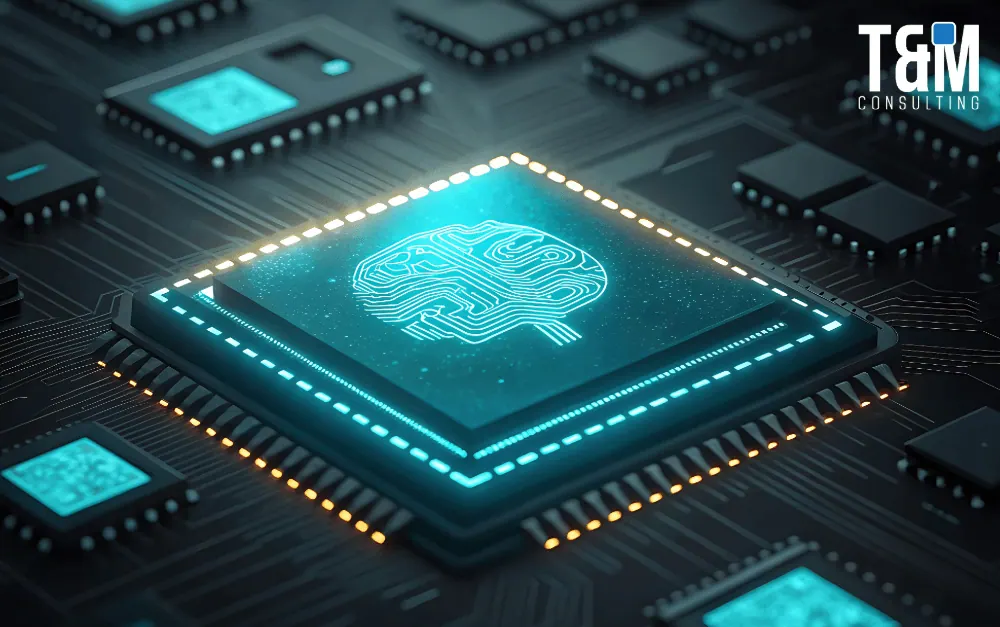
Edge AI combines Artificial Intelligence with edge computing. Instead of sending all data to a central server in the cloud, analysis occurs close to where the data is generated, such as in IoT sensors, smart cameras, or mobile devices.
Key benefits of Edge AI:
• Lower latency: real-time decisions without relying on a cloud connection.
• Enhanced security: sensitive data is processed locally, reducing exposure risks.
• Cost optimization: less traffic to the cloud means reduced bandwidth and storage.
• Resilience: systems work even with limited connectivity.
An Accenture report (2024) highlights that 75% of companies that adopted Edge AI reported significant improvements in operational efficiency and customer experience.
The convergence of Serverless and Edge AI
Although each approach has its individual advantages, the real technological revolution occurs when serverless and Edge AI are integrated.
Relevant use cases:
1. Smart cities: AI cameras at the edge detect incidents in real time and send processed events to the cloud with serverless architecture to coordinate responses.
2. Digital health: Portable medical devices process data with Edge AI and send immediate alerts; the serverless cloud automatically scales for population analysis.
3. Smart retail: IoT sensors analyze in-store purchasing patterns with Edge AI and, using serverless, synchronize inventories across multiple branches.
4. Manufacturing 4.0: Industrial machines detect faults in real time with Edge AI, while the serverless cloud coordinates predictive maintenance.
According to IDC (2025), organizations that combine Edge AI and serverless achieve a 40% reduction in operating costs and a 35% improvement in critical response times.
Implications for SMEs
SMEs often think that these technologies are reserved for large corporations, but the pay-per-use model of serverless and the accessibility of Edge devices make it viable for businesses of any size.
Examples:
• A logistics startup can use Edge AI in vehicle trackers and serverless to process information in real time and optimize routes.
• A retail SME can deploy in-store sensors to analyze consumer behavior without relying on expensive data centers.
The Forrester Wave (2024) asserts that 58% of SMEs that adopt serverless + Edge AI improve their competitiveness against larger companies thanks to agility and cost reduction.
Serverless computing and Edge AI are transforming the way companies design their technology architectures. Together, they offer an ecosystem where automatic scalability, cost efficiency, immediacy, and security are integrated to drive smarter and more resilient businesses.
At T&M Consulting, we help SMEs take advantage of these cutting-edge technologies, integrating solutions tailored to their needs so they can innovate and compete in an increasingly dynamic market.
Contact us: contact@tmconsulting.mx
Visit us: tmconsulting.mx