

An alternative to solar cells is being tested on a satellite.
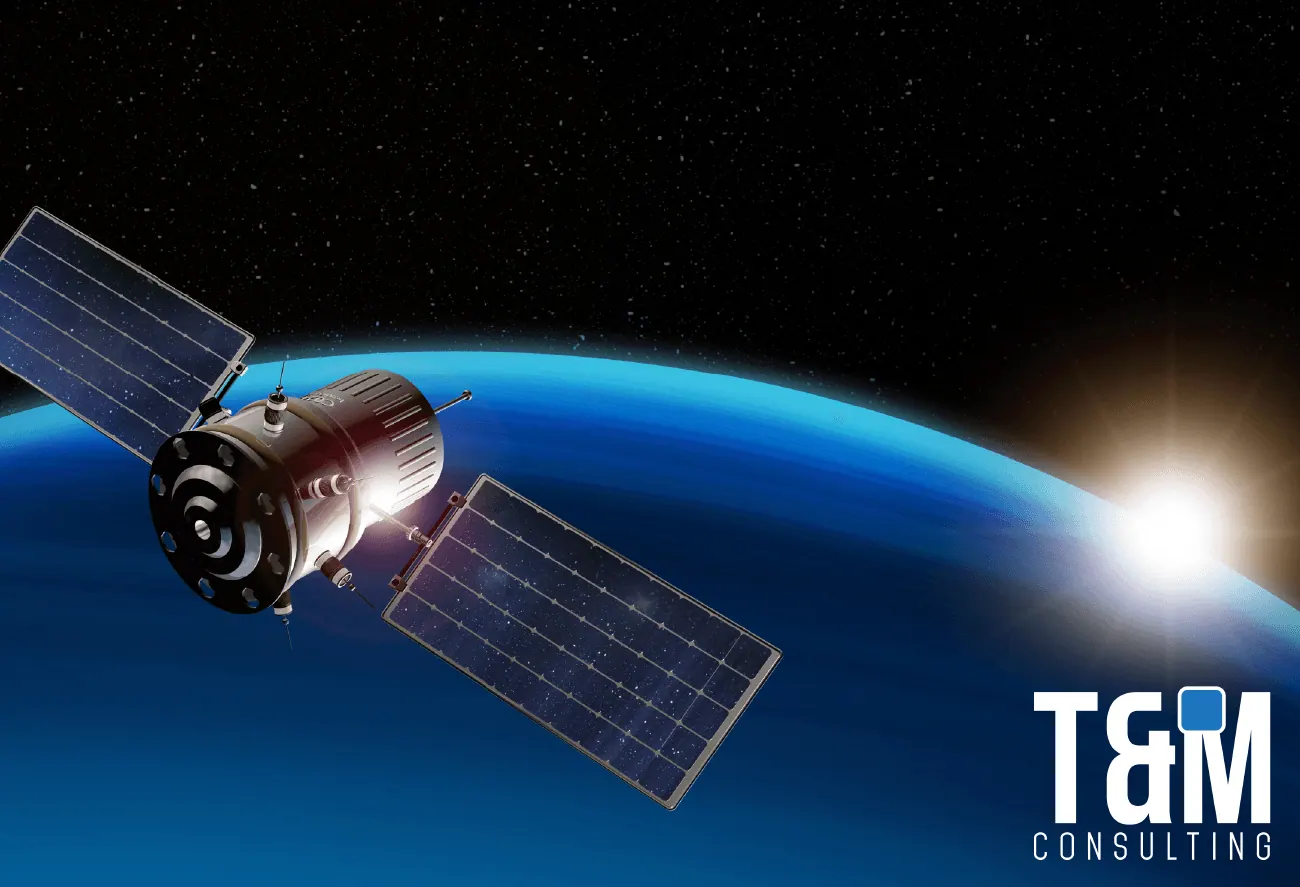
The technological breakthrough comes from the University of Lund, Sweden, a team of nanoengineering researchers managed to build photovoltaic nanowires, an alternative to traditional photovoltaic cells. With the advantage of being lightweight and requiring little material per unit area, they were tested on a satellite.
This novel technology, placed in pairs, is designed to optimize the efficiency of commercial silicon solar cells, possibly up to twice their capacity.
The Lund researchers have developed a method to build ultra-thin rods composed of semiconductor material on a substrate, which could reduce production costs and become a more sustainable alternative.
By employing these rods, rather than materials synthesized on top of each other, the nanowires require a smaller amount of material per unit area, ensuring that they are lightweight and thus suitable for installation in satellites where efficiency combined with low weight is essential to ensure adequate performance.
The nanometer-thick solar nanowire rods are composed of arsenic, gallium, and phosphorus.
Although the results obtained in the laboratory were not so promising, only 16.7% efficiency, Yang Chen, a researcher in the field, showed that nanowire solar cells can achieve 47% efficiency with the current structure. It is estimated that higher efficiency can be achieved by optimizing the triple diodes and reducing the surface effect of the nanowires.
As a bonus, nanowire solar cells are very durable and resistant to harmful radiation in space compared to film-based tandem solar cells.
Thanks to these advantages, nanowire solar cells were recently installed on a research satellite that was sent into space in the second week of January by research partners at the California Institute of Technology, Caltech in the USA.
The satellite will be in orbit during the spring, and results are expected to be received on an ongoing basis. Magnus Borgström, Professor of Solid-State Physics and head of the research team, believes that tandem solar cells will also end up on Earth in the long term, at least initially, silicon-free solar cells will be used in everyday items such as clothing, windows and decoration.
For more information, visit https://www.lunduniversity.lu.se/article/new-type-solar-cell-being-tested-space