

P-Flash, artificial intelligence support for firefighters
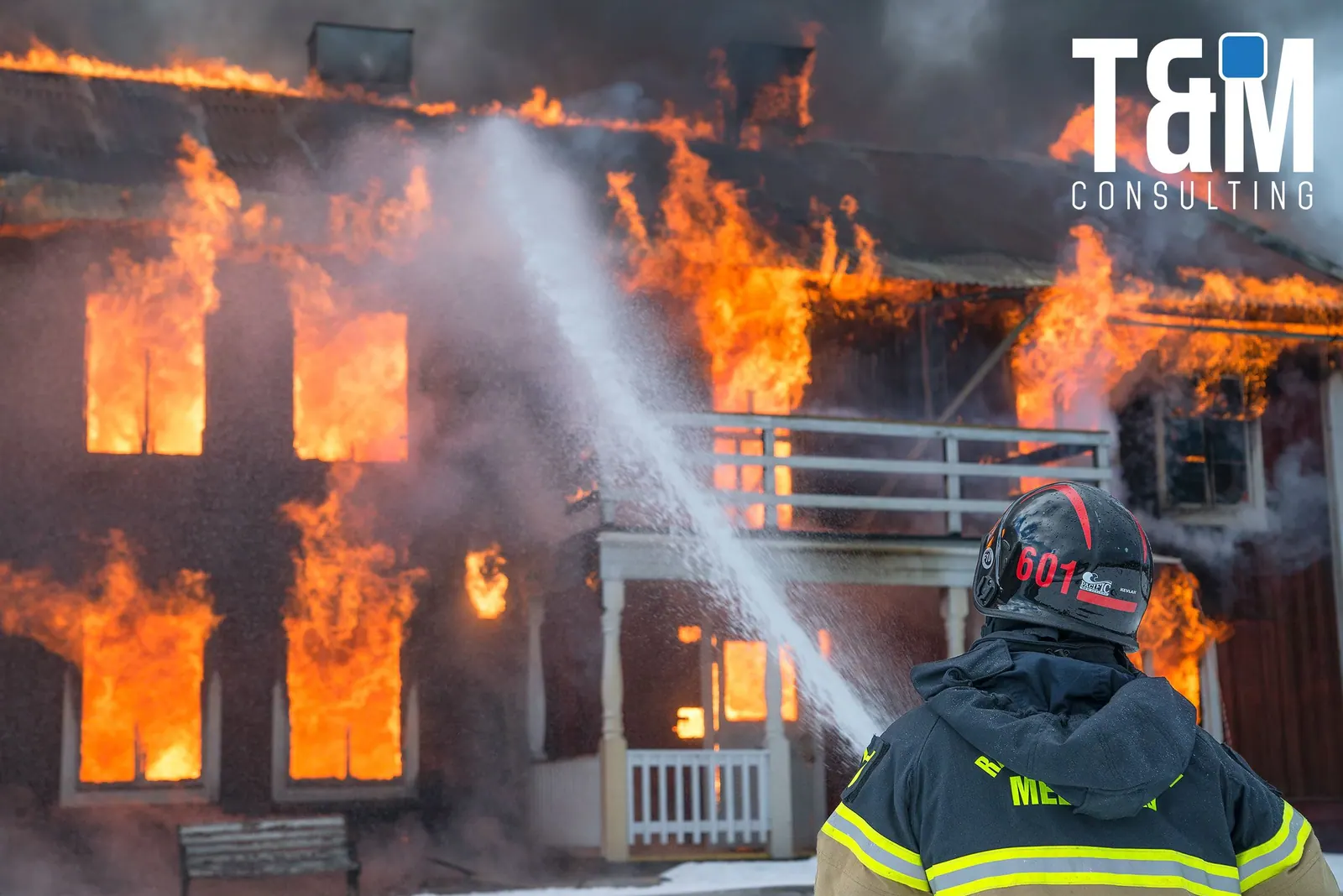
Firefighting is too dangerous a job for firefighters. To date, firefighters have only relied on their expertise to prevent life-threatening fires.
Designing a system that can detect the dangerous points where a fire can get out of control may seem unreasonable, but with the support of artificial intelligence it has been achieved.
P-Flash, a program based on artificial intelligence applied to firefighting, is a prediction and warning system developed by a team of researchers from the National Institute of Standards and Technology in the U.S. together with researchers from the Hong Kong Polytechnic University. The model itself predicts and warns about flashovers. Recall that this is the name given to the phenomenon observed in confined fires, where flammable materials are present, which can ignite almost simultaneously, causing a fire of large proportions.
This type of fire allows analysis that can help to design a better strategy, factors such as the evolution of heat intensity or direction of the most visible flames are some of the main elements, but they are secondary when it is necessary to rescue victims, among other actions.
The tool works by generating predictions based on the temperature data emitted by the heat detectors of a building, home or establishment. The artificial intelligence system triangulates the signal received by the heat detectors in use with the remaining ones that are not active.
Based on a fire simulation program, the research team generated a series of synthetic data together with a bidirectional short-term memory, whose learning comprises the complex relationship between the emitted temperature signals and the conditions of a flashover.
To achieve these relationships, the team ran 5,041 simulations, altering various elements such as the structure of the buildings, ventilation including both windows and doors, the scale of the fires, among others.
The results are promising; P-Flash accurately predicted, with one minute of anticipation, approximately 86% of the fires during the simulations. The best results were obtained in open spaces, in spaces with worse ventilation conditions, the tool has obstacles.
The report of this project was published in the Proceedings of the AAAI Conference on Artificial Intelligence, where they also indicate that the program is still under development for improvement, we are eager to know the scope of this system.